

There’s a myth out there that bank blogs and investment copy are boring. These 9 finance content writing examples tell a different story.
Organizations publishing stellar finance content understand the misconception that accurate, complex, and complaint marketing doesn’t have to equal boring. The right writing skills and messaging can catapult any content type – from videos to blog posts – to greater brand awareness and website traffic.
TL;DR? Take the 3-minute Finance Content Quiz and discover what your content focus should be.
Here is my roundup of finance and fintech brands doing amazing things with their content:
1. Deutsche Bank: Case Studies
There’s nothing I love more (or that works better) than a solid case study.
Deutsche Bank’s case study library highlights the good work they’ve done in the past. Each case study provides an in-depth look at real problems and solutions, which is ideal for their corporate investing audience.
But it doesn’t help to just glance through the library. Deutsche Bank’s format makes the difference. To get the gist of their approach to case studies, let’s take a look at one. For this article, I choose Stabilus: Setting up a business in India.
Why does it work?
Whether they are buying a new laptop or investing in a business, people prefer referrals. And if they can’t get referrals, they like hard data and testimonials.
The problem is, case studies can easily fall flat. Most B2B case studies follow the same formula: Problem, solution, success! Some finance and fintech companies hobble themselves by gating their testimonials. In today’s saturated market, fewer and fewer customers are willing to trade their email for access for a long-form testimonial, especially when competitors offer it for free.
Deutsche Bank’s ungated case studies are lengthy, and depart from the templated norm. In Stabilus, the opening quote offers context to the piece, but the first paragraph skips a dull rehashing of the problem. It takes a narrative approach, instead:
More than 4,000 miles separates India and Koblenz, Germany, where Stabilus Group has been headquartered since its foundation in 1934. In fact, it’s a 14-hour flight to Pune, where the company set up a new legal entity in April 2024, making India the 19th country in which the automotive and industrial automation supplier has established a local presence.
The story then shifts to Stefan Bauerreis, Group CFO of Stabilus, for insight into their expectations, before shifting into the background of the company’s expansion, and then returning to primary challenge of setting up a business in India. Finally, there is a description of how Deutsche Bank made the regional expansion possible, before ending the case study on the outlook of the project, not just the results.
This reframing of a case study matters. The featured client is not just a client, not just a name and statistic meant to showcase Deutsche Bank’s products and services. The bank centers Stabilus, positioning them as the protagonist, if we want to use common “Hero’s Journey” imagery.
Secondly, actions are specific. From Stabilus employee numbers to actions or considerations, Deusche Bank doesn’t shy from defining the solution. Any company in the same space can list helping a client obtain a GSTIN and IEC number – that’s common knowledge. But they also offer more details on the why behind choosing funding structures, and how the bank worked with Stabilus to make it a reality.

Could it be improved?
As a global player, Deutsche Bank has more leeway in publishing. But I feel that it could make better use of SEO with internal linking. Despite the title, it’s a pity it doesn’t come up further in the results for “setting up a business in India.” I feel that the case studies are hidden. At the same time, regional expansion from a CFO perspective is a niche topic, and doesn’t need to be everywhere.
Writing-wise, I have no notes. Just a big fan of the style.
How to do it:
To produce a similar case study, you should start documenting at the beginning of your next project. You’ll need:
- Client permission to use their name.
- An informative, short headline that mentions the client, their problem, or result
- A two-sentence summary of the study.
- Implement narrative structures to retain readers
- Hard data related to the process and results. This includes names, dates, figures, rates, and major KPIs. And take as many pictures or screenshots as possible.
- Quotes from the client in a short interview. A video is even better!
- Ensure that the client is always the central character
2. The FBS Facebook Page
With organic reach at an all-time low and raising CPC rates, social media marketing can be a challenge. But not for FBS. FBS Markets is a forex trading company focused in Europe and Asia, and it’s Facebook profile acts as micro-blog. Unlike other finance companies, they post long-form native content, videos, and the occasional promotional link.
Their long-form posts focus on industry news and education, and while that’s one method that sets them apart from most finance brands, their promotions add another dimension.

Their “Make Your Wish Come True” promotion brings social legitimacy and is consumer-focused. In this campaign, they’ve helped their clients celebrate wedding anniversaries, buy business equipment, and provide educational materials for blind children.
Yes, it’s that inspirational.
This combination of user-facing content with social conscious promotions reflects in their high engagement rate per post. While ad spending is involved, the amount of comments for non-promotional or contest posts is high for the finance industry.
Why does it work?
The FBS Markets approach works because it localizes tone and voice to multiple markets. Even if you are selling the same product, regional differences matter. Investing in translation and content writers with local expertise ensure that the message reaches the audience.
Could it be improved?
Honestly, FBS Markets has Facebook marketing down. It’s like a party in there. They have user-generated content, varied post type, a regular schedule, ad spend, reviews, and more.
They do have localized country pages, which is something only a company of their size can do successfully. While this can be a useful tool, it still may be more beneficial to have one page with geo-targeted content to boost your overall engagement rank and reach.
How to do it:
Consider writing long-form (3-4 paragraph) posts on your Facebook or Instagram page. This can include industry updates or be modified sections of your latest blog. Slap on an amazing graphic and test it with a $2 boost.
In terms of long-term campaigns, integrate a social cause into your campaign. But be authentic about it. Brainstorm some feasible ideas that your team loves and go with it. Introducing non-finance charities can expand your reach and humanize your brand.
3. Ripple’s Strategic Schedule
Most cryptocurrency websites provide technical outlines and a whitepaper. Ripple has designed a content plan that speaks for itself from other cryptos on the market.
The insights page, noted as the blog, works because it has additional stories to supplement brand news. You can find case studies, industry news, and strategically placed company updates altogether or sort them out to find interesting reads.
The insights section works for B2B, since it’s more professional than a blog, and the mixture of stories adds legitimacy to the brand.
Why does it work?
Ripple’s vast array of content is easy to navigate on the Insights page, providing support for those new to the industry and seasoned experts alike. The Trending Section and SEC highlight, in particular, reduce being overwhelmed by choices. And, as a writer interested in compliance, centering SEC commentary regarding the agency’s appeal against Ripple is strategic. It addresses potential concerns off the bat ad builds trust.
Could it be improved?
It’s interesting that there is both an Insights and Content Library section. I believe they could be combined, or, at the very least, the Content Library would have better sorting options. Between “blog” for insights and “content library,” I’m more pressed to view the latter first. Changing the generic term of “blog” to insights might change this. But, either way, it seems like an unnecessary duplication.

How to do it:
Design a content schedule that spaces out promotional material, case studies, and industry articles, so that they are mixed together. If you are only publishing press releases and promotional material, consider expanding to case studies and industry news to build authority and expand your reach.
The challenge with this kind of strategic planning is not coming across as random or overwhelming. So organization and filters are essential here.
4. Santander Bank’s Video Ad
Love The Office? Then you will want to watch Santander Bank’s recent ad (see below), which uses the same style humor to boost their brand. While most bank ads tend to focus on the result of saving with them – weddings, retirement, vacations – Santander Bank creates a fictional, clueless rival bank to highlight Santandar’s own practical offerings.
Why does it work?
If you can make people laugh, it’s memorable. More than any other emotion, humorous writing is so entertaining, that it’s guaranteed to generate conversations and go viral.
Could it be improved?
Santander’s ad hits the sweet spot between humor and business. The copy is perfect and hilarious and it’ll have you chuckling fur at least an hour after watching.
Perhaps the only thing lacking is that there is only one video.
How to do it:
Humor is hard. But it’s not impossible.
Try injecting some humor into your social media posts or videos. It doesn’t have to be based on The Office, but using pop culture references and styles can help.
But before you try anything, you may want to survey your target audience and see what they’re actually watching. And don’t forget to test!
5. Resting Business Face: Just everything
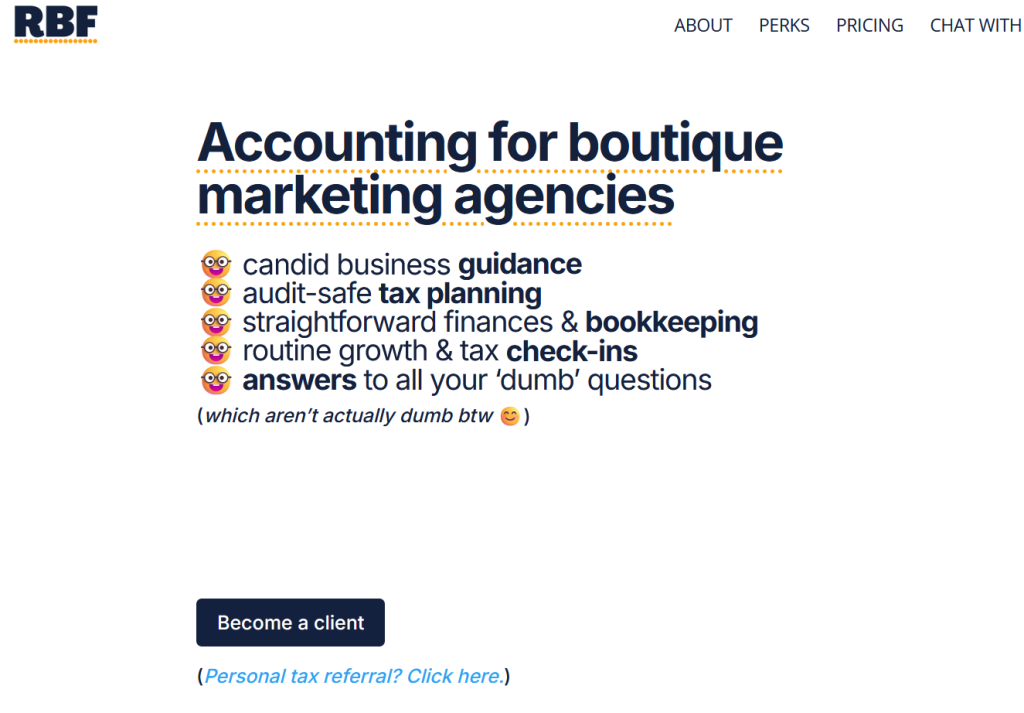
Okay. This is one of my legit favorites. Resting Business Face is the prime example of doing marketing right. Michael’s approach to CPA marketing is fun, authentic, relatable, and easy to follow. Finance and fintech brands that want to sound like a person should really review his website, LinkedIn, and newsletter.
And yes, I know, an accounting firm has a little more leeway compliance-wise than some other sub-sectors of finance. I would argue there’s a lot of value you can glean and apply to even the stuffiest and most risk-adverse businesses in finance (I’m looking at you, insurance companies).
Why does it work?
Michael’s approach works for a numbr of reasons, including:
- Clear, direct language
- Specific target audience (accounting for marketing agencies and consultants)
- Consistent voice and tone
- Limited, clear options and advantages to prevent decision overwhelm
Could it be improved?
My only, super-minor recommendation is that the website can feel text-heavy. But that’s generally a personal preference, and it’s greatly mitigated by the font size and spacing. Design matters just as much as copy, and it’s magic when both components work together.
How to do it?
This example isn’t as applicable to enterprise or even medium-sized businesses. It’s excellent for financial advisors, accounting firms, and similar service providers in the finance space. Startup founders may also be able to lift this more personable approach, depending on your industry or product.
Essentially, this is the perfect one-page website. To emulate it, you’ll need to:
- Develop your unique writing style — AKA, voice
- Keep a consistent tone
- Be clear over clever, your voice and tone can still communicate this
- Consider how visuals, like emojis, underlining, or other elements, can intensify your content
6. TD Bank: Visualize It
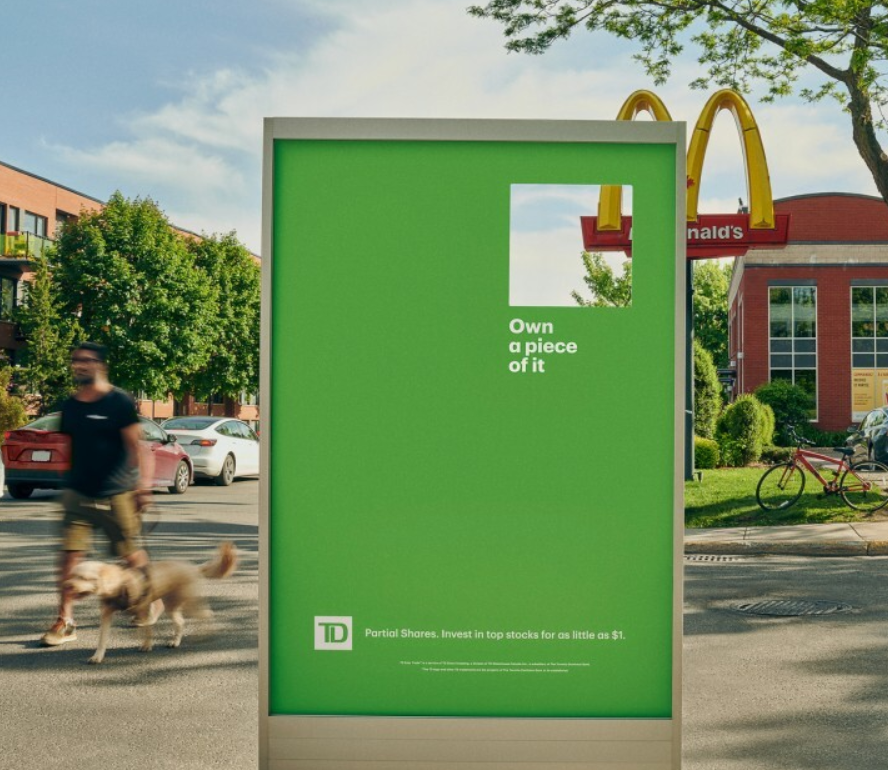
Okay, to understand this one, you have to see it. TD Bank published an ad, designed by Ogilvy Canada, and it’s beautiful. Here’s the example:
Why does it work?
TD offers brokerage services, including buying and selling stock. This single image, obviously inspired by guerrilla marketing tactics, visualizes that concept of owning shares. If you see this ad, you immediately understand the value of the product.
Further, this is part of a series, all targeting successful businesses. “Owning a Piece” becomes associated not only with TD branding, but successful stocks and brands. The emotional implication is that you can be part of that success, for a small investment.
Could it be improved?
From a marketing standpoint, it’s brilliant. As someone who works with investors, I believe that buying individual stocks is generally a terrible strategy and waste of money, even if you only put in $1. It’s like buying a book on becoming a doctor, believing you will be an experienced pro by finishing it (assuming you read it).
More than improvement, it offers a question of ethics and selling products in finance, especially in regards to consumer education. The average consumer at a brokerage isn’t going to know the difference between multiple products, and stocks are probably the “sexiest” of the assets. Which is why this ad works so well.
I don’t expect an ad to solve problems in consumer education. That’s what endless content libraries are for. But it is one of those, “once you know, you know moments” if you work in an industry too long.
How to do it?
This ad is all about emotional pull and simplifying your products. What is one thing that you sell that is well-understood? And how can you visualize the emotional gain? Defining these triggers are the quickest way to developing an advertisement that works on a similar level.
7. Wealthramp: Financial Decisions Pages
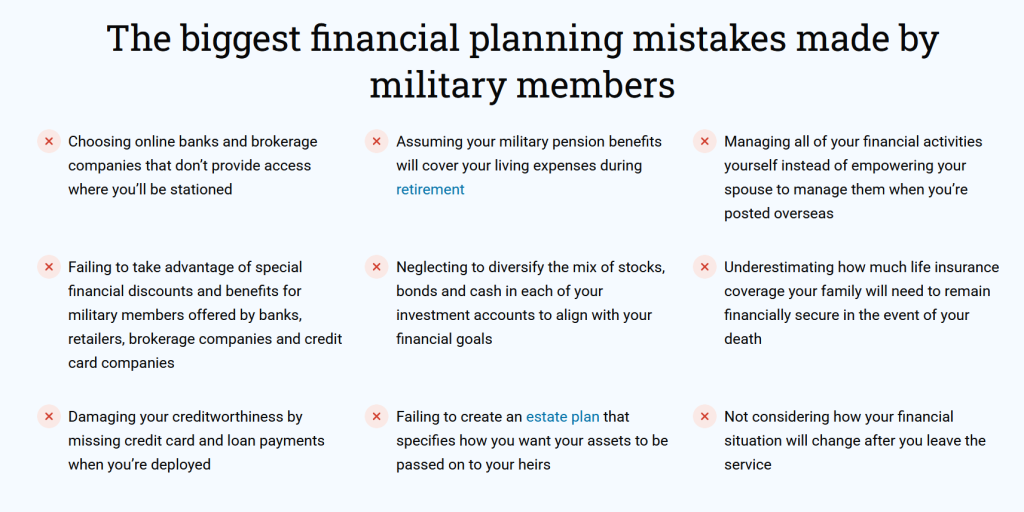
Wealthramp is a company founded by Pam Krueger and it aims to help customers find a fiduciary advisor. They have an extensive content selection, but I’d love to focus on their financial decisions pages, especially their military benefits page.
After volunteering alongside veterans over the past year, I learned a significant amount about how many companies miss the mark when it comes to supporting military and veteran members. Now, I can’t track Wealthramp’s actual track record here – but it did make me pay more attention to its military members page.
And I think it did a good job of summarizing the problems this group faces and doesn’t waste words describing their offering.
Why does it work?
Many of the veterans I’ve met share a similar trait: They don’t have time to waste. Now: That’s not a real study, that’s personal experience. It doesn’t account for every veteran or military member. But my general perspective is that it’s better to be clear and as easy to read as possible, because these folks are busy. The last thing they need is a lengthy packet of reading just to get the gist of your product or services.
It is also questions-and-answers driven, which lends itself to SEO. This makes it easier to skim through while ensuring that the content will be useful and relevant.
Could it be improved?
I’d love to see more from veterans and military members who have used the service. I realize that testimonials are new to the fiduciary world, having been banned until a few years ago. I also know that meeting compliance may not feel worth it for a quote or two. However, this is regularly underserved demographic, with many companies using this group to bolster their own standing.
How to do it?
No matter which audience your targeting, having a key page that answers their questions and concerns can build trust and boost conversions. But it’s important to not overly depend on an SEO list of questions. While these should be included, speaking to your target audience and getting their feedback will make it easier to craft content.
The next step is design based: Make it digestible. This example page is actually text-heavy, but it does a good job of keeping the content readable.
8. SAP Community Blog: Short and Sweet
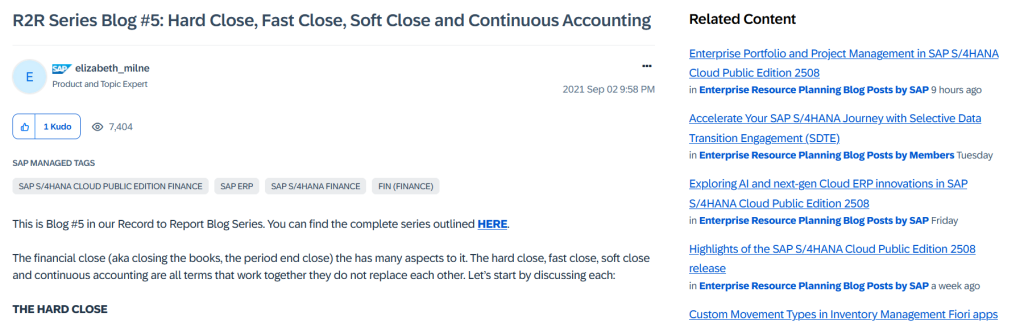
Despite what your SEO guru tells you, not every post has to be 1,200 words. In some instances, especially tutorials, shorter can be better. One example of a post that does a good job is the SAP Community blog on continuous accounting.
Why does it work?
Not all financial topics are complicated. They can be nuanced. Some have unique use cases or scenarios. But even then, sometimes a couple hundred words and a picture are sufficient to cover a topic well.
For example, continuous accounting describes modernizing the accounting process. This speeds up the period-end close process, enabling accountants to tap into insights faster.
Now, as a writer tasked with this topic, you may have a range of expectations. A higher word count means more fluff, which can obscure the real benefit and challenges that come along with continuous accounting.
The SAP blog does away with this, thus producing one of the most helpful and concise articles I’ve read on the topic so far.
Could it be improved?
The only questions I had after the article were what features in modern accounting software contribute the most benefits or clarity to the continuous accounting method. I have some assumptions: Automation, real-time data, etc.
Of course, this might merit its own article.
How to do it?
Content writers may or may not have control over word count. Even if you avoid word-count based pricing, your client likely has word-count expectations. This, unfortunately, can lead to fluff. It’s important to be intentional about what can be added to maintain relevancy and quality.
Keep your drafts brief for tutorials, but consider adding interview quotes or answer closely-adjacent questions to achieve word count. If this isn’t possible, it’s always possible to try discussing the issue with your client, and propose adding a new design element instead.
9. The Financial Diet: Quality Instagram Posts
I started in social media, and I’m very selective with social media clients because it’s so easy to burn out. Which is why I create an inspiration file for every creator that stands out. The Financial Diet account really showcases what educational content can look like.

Why does it work?
Educational content can be tough, because there’s so so so so so much of it. Of varying qualities. And do people really want to learn about finance on IG, anyway?
Hint: The answer is yes.
What I like about The Financial Diet is that content is varied, there is off-site resources, like the money personality quiz, and she taps into the emotional aspects of money. So much of how we handle money is mindset-based and emotionally charged, that individuals can’t actually get to the terms and formulas that work until they adapt their perspective. And it helps when the person you’re talking to gets you, right? Where your feelings about money or the economy are validated.
The posts are also full of actions, not vocabulary. For many professionals in the compliance world, this is impossible to achieve without significant disclosures. And, even then, it can be a risk. However, even compliant-heavy sectors learn from on-the-ground tactics and precision that we see on her IG page.
Could it be improved?
The reason I picked this example is because it really is flawless when it comes to women who can’t afford a fiduciary advisor. The target audience is women who are working to eliminate debt and build wealth without sacrificing themselves without gain. And unlike many brands in the advisory world, which target individuals in a higher tax bracket, it’s both validating and educational for a significant number of American women.
For most companies, marketing looks like content that teaches, content that sells, and content that answers questions. We rarely see content that aims to solve problems, especially ungated content. And I think that’s why we see such an engagement rate with The Financial Diet’s feed.
So, no improvements here.
How to do it?
It pays to be precise with client pain points and validate their emotional reactions. It can seem unprofessional, and in some finance spaces, will be challenging to pull off. But the quickest way to building trust and engagement is through emotional, narrative writing.
It doesn’t have to be fearful or negative. In fact, many of The Financial Diet’s posts are inspiring.
To emulate this channel’s success, you’ll want to sit down with the marketing team and brainstorm about emotional competency and behavior.
- What emotions do your clients’ pain points evoke?
- How are they expressed?
- How would your ideal audience feel if they saw their emotions validated?
- What level of tapping into emotion is comfortable for your stakeholders?
Not every content piece needs to be inspirational or a tearjerker. But shying away from emotional content only dulls the brand.
What These Finance Content Examples Have in Common
In this round-up, all companies have two things in common: They put the target audience experience first. And they are ultra-specific Whether it’s through colloquial copy, humor, or in-depth reviews, the five brands listed here are knocking it out of the park.
But putting together your creative campaign begins not with the emotional output, but the strategy. Take the 3-minute quiz below and kick-start your content strategy process: